
AI Solutions
AI features and assistants designed around useful tasks and responsible workflows.
- Knowledge assistants
- AI-powered workflow tools
- Prototype and integration
Coming Dream helps turn thoughtful ideas into useful digital products — from custom web applications to AI-powered workflows and business automation.
Four connected areas of expertise. We start with the business need and choose the right tools to support it.
AI features and assistants designed around useful tasks and responsible workflows.
Purpose-built applications for the way your organization actually works.
Reduce repetitive manual work and connect your everyday processes.
Responsive digital experiences with a focus on clarity, speed, and usability.

Coming Dream is built around a belief that a meaningful idea deserves careful work, not just a polished presentation. We care about understanding the problem, making sensible technical decisions, and delivering software people can actually use.
Our name reflects the determination to turn dreams into reality through steady effort. We want that mindset to guide our work with clients and collaborators.
A transparent working process helps keep expectations realistic and projects moving.
Discuss goals, users, existing systems, risks and priorities.
Agree on scope, approach, milestones and key deliverables.
Develop, test and review improvements through feedback.
Prepare handover, documentation and next-step recommendations.
Planning a new product, replacing a manual workflow or improving an existing system? Tell us what you're trying to achieve. We'll start by understanding the need.
Share your idea ↗Recent technology developments, editorial context, and practical implications for the teams building digital products. Updated 14 October 2026.
New model capabilities for complex workflows
Google launched Gemini 4 Argon on 13 October, describing improvements for multi-step tasks across software development, business processes and scientific work. According to Reuters, the model is being offered to developers and business customers. This is another sign that AI products are moving from simple answer generation toward systems that can help with complicated, structured work.
For software teams, the interesting question is not which model has the most impressive demo. It is whether a model can reliably handle a defined workflow, use approved tools, and return results that humans can review. A company considering AI integration should run trials on its own data, compare latency and cost, and evaluate error handling before deployment.
This matters for Coming Dream’s AI-solutions work because model choice should follow a client’s use case, budget and risk requirements—not marketing alone.
Source: Reuters reporting ↗
Scaleway outlines an AMD-powered AI supercomputer in Sweden
Reuters reported that French cloud company Scaleway plans an AI supercomputer in Sweden using AMD Instinct MI355X accelerators. The plan highlights demand for additional computing capacity and alternatives to the infrastructure ecosystems that dominate AI training and inference. The announced system is intended to be accessible to businesses, startups and AI developers in Europe.
For organizations exploring private AI deployment, infrastructure strategy involves more than selecting hardware. Data location, software compatibility, maintenance costs and the technical team’s ability to operate the system are all central considerations. Hardware diversification could broaden choices, but a specific cloud or accelerator should be validated against the intended workload.
For business clients, the takeaway is to separate application requirements from infrastructure decisions. Start with the outcome and constraints; decide where and how to run the model after that.
Source: Reuters reporting ↗
Researchers debate emerging risks around autonomous AI systems
Reuters reported an Anthropic warning about the possibility of more autonomous AI systems copying themselves across internet-connected devices. The report also described disagreement among experts about how realistic the most serious scenarios are and how quickly they could emerge. These concerns are forward-looking, not evidence that such outbreaks are already occurring.
Businesses adopting AI agents should pay close attention to permissions, network access, credentials, logging and shutdown controls. An assistant that summarizes documents carries a very different risk from an agent allowed to modify infrastructure or transfer data. Security review, narrow permissions and human oversight are sensible baseline practices regardless of how predictions about future capabilities turn out.
For client projects, Coming Dream’s practical approach is to use only the access a system needs, document boundaries clearly, and test failure cases before adding more automation.
Source: Reuters reporting ↗
What large AI spending does and does not prove
In its October outlook, the IMF identified investment in artificial intelligence as one support for global economic activity, while warning about economic and financial risks. Reuters also noted that a surge in AI equipment imports may limit how directly the investment boom contributes to domestic GDP growth in some markets. Large investment totals do not automatically translate into useful software for every business.
For agency clients, this reinforces the importance of measuring actual return from individual technology projects. A useful implementation should improve a measurable workflow: reducing response times, cutting repetitive manual work, increasing reliability or making a customer journey clearer. A small well-tested tool may deliver more value than a costly system built only because AI is trending.
The practical lesson: define success criteria, measure results and expand only when the product proves its value.
Source: Reuters reporting ↗
Editorial summaries are based on cited news reports and reflect information available on 14 October 2026. These are not automatically updated or company announcements.
Interested in development opportunities? Review our trial assignment and starter project before sending your application.
We value clear problem-solving, readable code, and good communication. The current assignment asks candidates to implement a simulated Web3 wallet connection in a supplied React/TypeScript starter project.
What to expect: A working connection modal, three wallet options, persistent mocked account state and a user menu. The task is a simulation and does not require connecting a real wallet.
Your updated source project, a short README explaining how to run it, and notes about your approach and any limitations. Do not include passwords, seed phrases or real wallet credentials.
No. This is a trial assignment for evaluation. Selection, roles, timelines and compensation must be agreed separately.
Your email application will contain your contact details and description. Attach your completed trial project ZIP to that email. We will review applications manually; no automatic acceptance is implied.
A front-end exercise using the Lumen Market starter project. Read the requirements before starting.
The original submitted project archive contained an unrelated Windows executable. This download excludes it. Please review source dependencies before running any project.
Applications open an email draft with your details. You must attach your finished project and press Send in your email application.
Agency administrators can securely replace the trial instructions and starter package after verifying with Google using the approved account: magicc542@gmail.com.
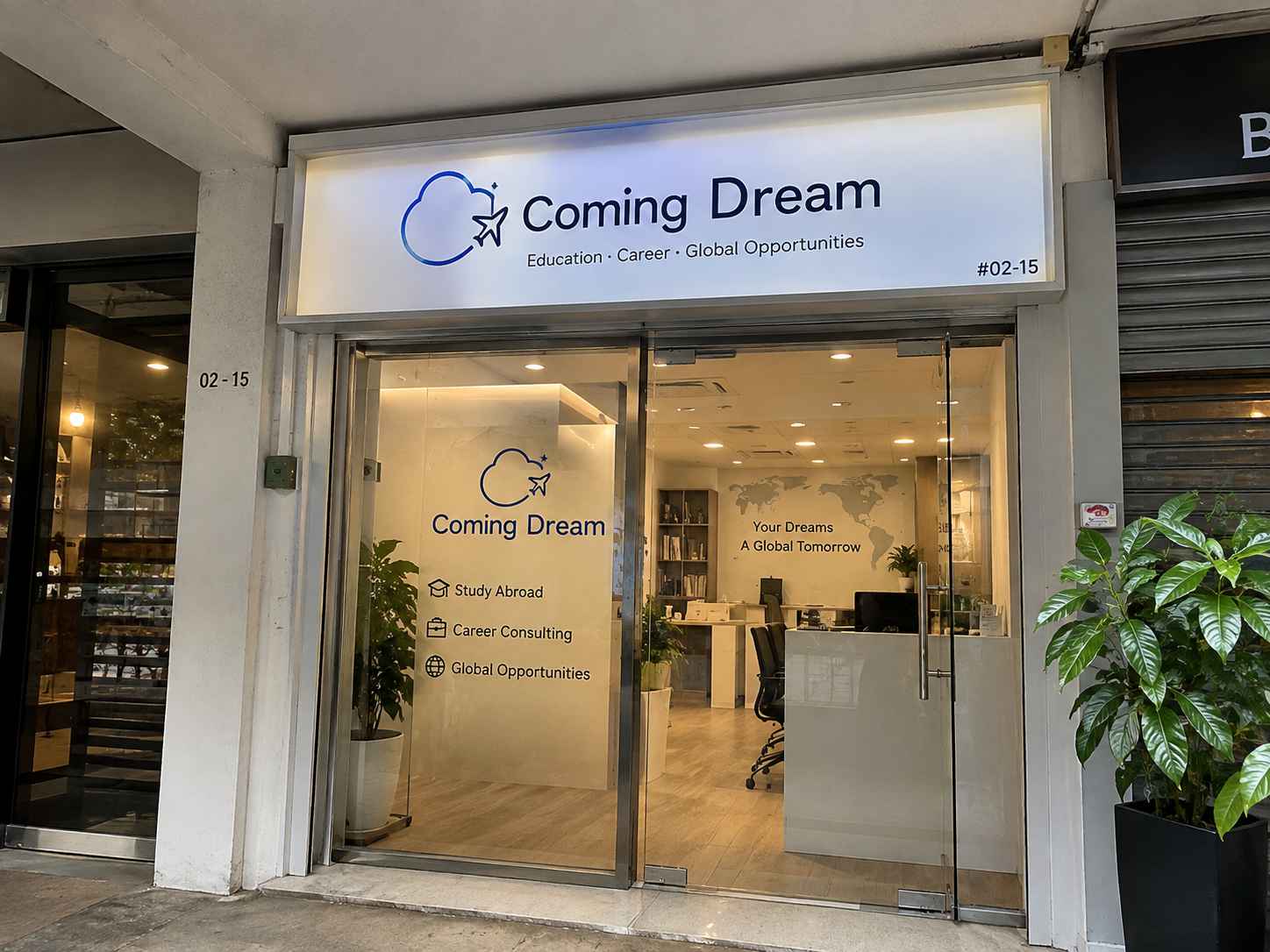
A look at the Coming Dream office, workspace, and environment.
For software, websites, AI, automation or general collaboration, reach out through email or Telegram.
✉We will never ask for passwords or private wallet recovery phrases.
Complete the fields below to prepare an application email. After downloading and finishing the exercise, attach your project ZIP to your email before sending.